
Indian Roads as the Ultimate Test for the Future of Cars Jensen Huang Vision for Software Defined Vehicles and Autonomous Driving
Introduction
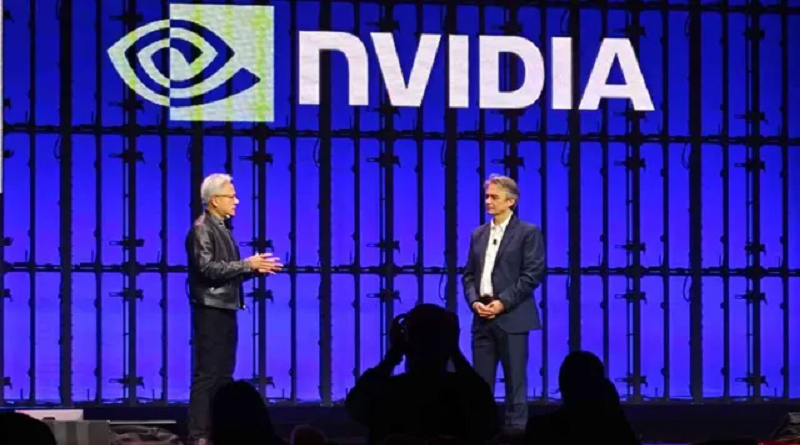
The global automobile industry is standing at the edge of a historic transformation. What once revolved around engines, gears, and mechanical strength is now rapidly shifting toward software, artificial intelligence, and virtual simulation. At the 3DExperience WORLD 2026 event held in Houston, Nvidia Founder and CEO Jensen Huang delivered a powerful message that clearly defined this transition. He stated that the world is moving toward software defined vehicles and that India, with its uniquely complex road conditions, will play a crucial role in shaping the future of autonomous driving.
This statement is not just a technological prediction. It is a recognition of India as one of the most important testing grounds for next generation mobility. The convergence of Nvidia and Dassault Systemes further reinforces how digital design, simulation, and software will dominate the cars of tomorrow.
The Rise of Software Defined Vehicles
A Fundamental Shift in the Auto Industry
Jensen Huang emphasized that the automotive industry is no longer centered only on hardware innovation. The next era belongs to software defined vehicles, where the intelligence of the car is controlled by code, algorithms, and data driven systems rather than purely mechanical components.
In this new paradigm, a vehicle is more like a computer on wheels. Features, safety systems, performance optimization, and even driving behavior can be updated and improved through software. Just as smartphones evolve through updates, future cars will continuously improve over their lifetime.
This shift fundamentally changes how vehicles are designed, manufactured, and experienced by users. Automakers must now think like software companies while maintaining the reliability and safety standards of traditional automotive engineering.
Cars Born in the Virtual World
Designing and Testing Before Hitting the Road
One of the most powerful ideas shared by Jensen Huang was that future cars will be fully developed in the virtual world before they ever touch real roads. Design, testing, validation, and safety checks will all happen through advanced digital simulations.
Virtual environments allow manufacturers to test millions of scenarios that would be impossible or extremely risky to recreate in the real world. Weather changes, traffic density, unpredictable pedestrian behavior, and emergency situations can all be simulated repeatedly.
This approach drastically reduces development time, lowers costs, and improves safety. It also ensures that by the time a vehicle reaches the road, it has already faced extreme conditions in a controlled digital ecosystem.
Nvidia and Dassault Systemes Partnership
Building the Digital Foundation of Future Mobility
The collaboration between Nvidia and Dassault Systemes was highlighted as a defining force behind this transformation. This partnership is not limited to vehicle styling or engineering but extends across the entire lifecycle of an automobile.
Dassault Systemes brings its expertise in virtual twin technology, enabling companies to create precise digital replicas of vehicles, factories, and supply chains. Nvidia contributes high performance computing, artificial intelligence, and advanced simulation platforms.
Together, they empower automakers to design world class vehicles entirely in the digital space, validate them through simulation, and optimize manufacturing processes before production even begins. This integrated digital approach sets a new standard for efficiency and innovation in the auto industry.
Indian Roads A Unique Driving Reality
Complexity That Challenges Both Humans and Machines
Jensen Huang shared his personal experiences of traveling on Indian roads, describing them as among the most challenging in the world. High traffic density, mixed vehicle types, unpredictable movement, and limited lane discipline create a highly dynamic environment.
He recalled situations where traffic moved so slowly that vehicles traveled at nearly the same pace as pedestrians. This observation was not meant as criticism but as an honest reflection of real world driving conditions in India.
These conditions represent the ultimate challenge for any driving system, whether human or autonomous. The sheer diversity of scenarios encountered on Indian roads cannot be easily replicated in controlled environments.
Why India Matters for Autonomous Driving
The Most Critical Testing Ground
According to Jensen Huang, the very challenges that define Indian roads make them essential for the future of autonomous driving. Complex traffic behavior forces autonomous systems to become more intelligent, adaptable, and resilient.
If a self driving system can operate safely and efficiently in India, it demonstrates a level of robustness that few other environments can provide. Success in India would signal readiness for global deployment.
India is therefore not just a market for autonomous vehicles but a proving ground that can shape global standards for self driving technology.
No One Size Fits All Approach
Autonomous Technology Must Adapt Locally
Jensen Huang made it clear that autonomous driving technology cannot simply be copied from Western markets and deployed in India. Driving behavior, road infrastructure, and traffic culture vary significantly.
Self driving systems must be trained to understand local patterns, informal rules, and human behavior unique to Indian roads. This requires region specific data, localized AI models, and continuous learning.
The future of autonomous mobility depends on customization rather than standardization. India exemplifies why local adaptation is essential for global success.
The Expanding Role of Semiconductors and Software
The Digital Core of Modern Vehicles
Modern vehicles, especially electric and connected cars, rely heavily on semiconductors and software. From power management and safety systems to digital dashboards and advanced driver assistance, every function depends on computing power.
Nvidia has evolved beyond its origins as a graphics company. Its platforms now support artificial intelligence based autonomous systems, real time simulation, and high performance vehicle computing.
As vehicles become more intelligent, the demand for advanced chips and AI driven software will continue to grow, making semiconductors the backbone of the automotive future.

Digital Twins Transform Manufacturing
From Design to Factory in One Ecosystem
Dassault Systemes virtual twin technology allows manufacturers to simulate not only vehicles but entire factories and supply chains. This means production lines, logistics flows, and operational efficiency can be optimized digitally before implementation.
By identifying issues in the virtual stage, companies reduce waste, minimize errors, and improve overall quality. Manufacturing becomes smarter, faster, and more resilient.
This approach is especially valuable in large scale markets like India, where efficiency and scalability are critical to success.
India as a Strategic Automotive Market
Growth Driven by Technology and Electric Mobility
Dassault Systemes CEO Pascal Daloz highlighted India as a strategically important market, particularly in automotive and electric vehicle segments. Rapid adoption of new technologies and strong growth potential make India central to future mobility strategies.
Indian manufacturers are increasingly embracing digital tools and advanced engineering to compete globally. This shift positions India not just as a production hub but as a center for innovation.
The Future of Mobility
When Software Defines the Driving Experience
In the coming years, buying a car will mean investing in a digital platform that evolves over time. Over the air updates, AI driven safety features, and personalized driving experiences will become standard.
Vehicles will continuously learn, adapt, and improve based on data and user behavior. The driving experience will be shaped as much by software updates as by physical design.
India will play a key role in shaping this future by challenging technology to perform under the most demanding real world conditions.
Conclusion
Jensen Huang vision positions India at the heart of the global transformation toward software defined and autonomous vehicles. Indian roads, with all their complexity, represent the ultimate test of intelligence, adaptability, and safety.
The partnership between Nvidia and Dassault Systemes signals a future where cars are designed, tested, and perfected in the digital world before entering reality. In this future, software and semiconductors will define mobility, and India will help set the benchmark for the world.
As the automotive industry accelerates toward a digital future, one thing becomes clear. If autonomous technology can succeed on Indian roads, it can succeed anywhere.