
GRAP-III Reimposed in Delhi-NCR as Air Quality Deteriorates to ‘Very Poor’
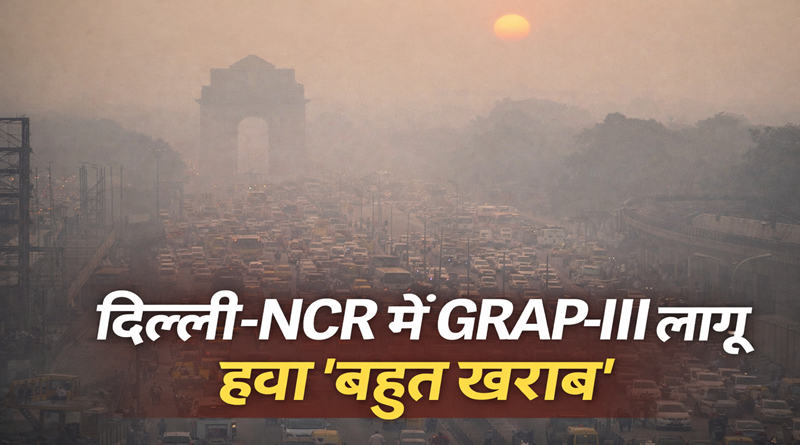
Air pollution levels in Delhi-NCR have once again reached alarming levels, prompting authorities to reimpose Stage-III of the Graded Response Action Plan (GRAP-III). The move comes after the region’s Air Quality Index (AQI) slipped into the “Very Poor” category, raising serious health and environmental concerns for millions of residents.
The decision was taken by the Commission for Air Quality Management (CAQM) following a review of real-time air quality data and weather forecasts. Several monitoring stations across Delhi, Noida, Ghaziabad, Gurugram, and Faridabad recorded AQI levels above 300, with high concentrations of fine particulate matter (PM2.5 and PM10) being the primary contributors.
Why Air Quality Has Worsened Again
Experts attribute the sudden deterioration in air quality to a combination of unfavourable meteorological conditions and local pollution sources. Low wind speeds, falling temperatures, and dense fog have restricted the dispersion of pollutants, allowing harmful particles to remain suspended in the air for longer durations.
Vehicular emissions, industrial activities, construction dust, and biomass burning in surrounding regions have further added to the pollution load. Weather agencies have also warned that conditions are unlikely to improve significantly in the immediate future, increasing the risk of prolonged exposure to polluted air.
What Is GRAP-III and When Is It Implemented
The Graded Response Action Plan is a set of emergency measures implemented in phases based on air quality levels. GRAP-III is enforced when AQI enters the “Very Poor” range (301–400). At this stage, stricter curbs are introduced to prevent pollution from escalating into the “Severe” category.
Authorities have stated that proactive enforcement of GRAP-III is essential to safeguard public health and avoid a complete environmental emergency.
Key Restrictions Under GRAP-III
With the reimposition of GRAP-III, several stringent measures have come into effect across Delhi-NCR:
- Complete ban on construction and demolition activities, except for essential public infrastructure projects
- Closure of polluting industries operating on unapproved fuels
- Restrictions on mining activities and stone crushers
- Intensified checking of vehicles, especially older and diesel-powered commercial vehicles
- Increased mechanised road sweeping and water sprinkling to control dust pollution
Local authorities have been directed to ensure strict compliance, with penalties and legal action against violators.
Impact on Daily Life in Delhi-NCR
The worsening air quality has had a noticeable impact on daily life. Residents have reported reduced visibility, persistent smog, and breathing discomfort, especially during early morning and late evening hours.
Schools have been advised to limit outdoor activities for students, while offices and businesses are encouraging remote or flexible work arrangements where possible. Hospitals across the region have witnessed an increase in patients suffering from respiratory issues, asthma attacks, eye irritation, and throat infections.
Flight and train operations have also faced occasional disruptions due to fog and low visibility, adding to commuters’ difficulties.
Health Experts Issue Advisory
Health professionals warn that prolonged exposure to very poor air quality can have long-term consequences, including chronic lung disease, heart complications, and reduced immunity. Vulnerable groups such as children, the elderly, pregnant women, and those with pre-existing conditions are advised to take extra precautions.
Doctors recommend wearing masks outdoors, avoiding strenuous physical activity, keeping windows closed during peak pollution hours, and using air purifiers indoors if available.
Possibility of Stricter Measures Ahead
Authorities have cautioned that if pollution levels continue to rise and AQI enters the “Severe” category, GRAP-IV measures could be implemented. This would include a ban on non-essential diesel vehicles, suspension of additional industrial activities, and possible restrictions on movement.
Environmental experts stress that while GRAP measures provide temporary relief, long-term solutions such as promoting public transport, transitioning to cleaner fuels, controlling industrial emissions, and increasing green cover are essential to address Delhi-NCR’s chronic pollution problem.





Thank you for another excellent post. Where else may just anyone get that type of info in such a perfect approach of writing? I have a presentation subsequent week, and I am at the search for such info.
I conceive you have observed some very interesting points, thanks for the post.