
India’s Win Was Sealed at the Toss: Pakistan’s Three Big Mistakes and Team India’s Historic Six-in-a-Row
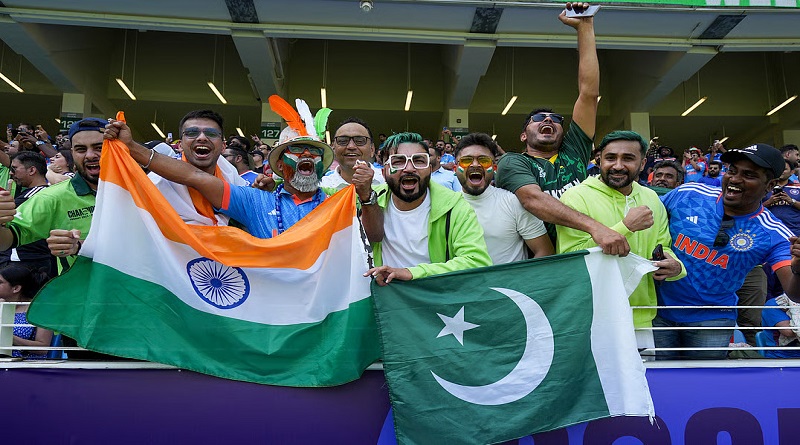
When India and Pakistan meet on a cricket field, it’s more than just a game — it’s passion, emotion, and national pride. Millions of fans across the world glue themselves to the screen, knowing that every ball has the weight of history. In the recent Asia Cup clash in Dubai, India once again outclassed Pakistan to script history.
This wasn’t just another victory. It was India’s sixth consecutive triumph over their arch-rivals, a record that highlights dominance on one side and repeated blunders on the other. Pakistan’s three major mistakes shaped the course of the game — one of which was made even before the first ball was bowled.
India’s Historic Six-in-a-Row Against Pakistan
With this emphatic win, India registered its sixth straight victory over Pakistan in international cricket — the first time ever in 73 years of rivalry. This streak is a matter of immense pride for Indian fans, while for Pakistan, it reflects deep cracks in their cricketing structure. For the Men in Blue, it wasn’t just about winning a group-stage match, it was about stamping authority.
Mistake 1: Choosing to Bat First After Winning the Toss
The Dubai International Cricket Stadium has a well-known trend. Teams chasing targets here almost always have the upper hand. Over the last five years, out of 18 T20 internationals played here among the top 12 teams, 16 were won by the chasing side.
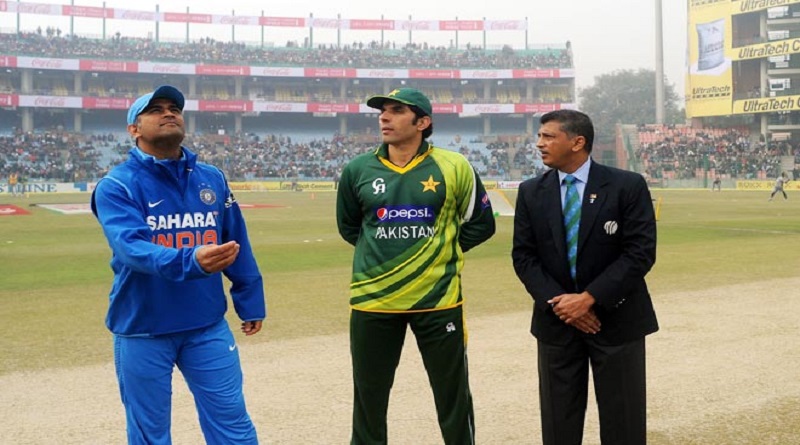
Yet, Pakistan’s captain Salman Ali Agha made a shocking call — he opted to bat first after winning the toss. History was against him. Pakistan’s only two T20 wins over India in the past 13 years had come on this very ground, both while chasing.
Even commentators like Irfan Pathan, Ajay Jadeja, and Sanjay Manjrekar expressed surprise over the decision. It wasn’t the first time either; in a past Champions Trophy clash in Dubai, Pakistan had made the same mistake, batting first after winning the toss — and India had handed them a one-sided defeat then too.
The decision defied logic, strategy, and statistics — and it became the first nail in Pakistan’s coffin.
Mistake 2: Dropping Haris Rauf from the Playing XI
If the toss call raised eyebrows, the second blunder was even bigger. Pakistan left out Haris Rauf — their leading wicket-taker against India in the Asia Cup squad. He had claimed seven wickets in the tournament and was the one bowler who troubled Indian batters consistently.
Despite his proven record, Pakistan’s think tank benched him. That left Shaheen Shah Afridi carrying the burden of leading the attack alone. But Shaheen was hammered early, and with no equally potent bowler at the other end, India’s top order feasted freely.
Leaving out Rauf not only weakened Pakistan’s bowling but also gave Indian batters the confidence to play their natural attacking game without fear. It was a tactical misstep that Pakistan paid heavily for.
Mistake 3: Defensive, “Tuk-Tuk” Batting
Modern T20 cricket thrives on aggression. The mantra is clear — keep the scoreboard ticking, keep striking even if wickets fall. But Pakistan completely abandoned this approach.
At just 6 runs, they had already lost two wickets. Instead of counterattacking, the batters went into a shell. Fakhar Zaman and Sahibzada Farhan added 39 runs for the third wicket, but they consumed 38 balls — a scoring rate of barely 6 runs per over, which is unacceptable in today’s T20 standards.
Worse, six of Pakistan’s batters finished with strike rates below 100. The innings lacked urgency, intent, and imagination. If not for Shaheen Shah Afridi’s cameo of 33 runs off 16 balls at the end, Pakistan might have struggled to even cross 100 runs.
This conservative approach meant Pakistan never looked like competing. India’s bowlers maintained pressure throughout, while Pakistan’s batsmen dug their own grave.
India’s Bowlers: Relentless Pressure from Start to Finish
India’s victory was not only because of Pakistan’s mistakes but also due to their own sharp execution. Hardik Pandya set the tone by picking a wicket on the very first legal delivery of the match. Jasprit Bumrah followed up in the next over, reducing Pakistan to survival mode early on. Pakistan could only manage 42 runs in the powerplay.
The spinners then took charge. Kuldeep Yadav, Axar Patel, and Varun Chakravarthy turned the game into a web of spin. Kuldeep returned figures of 3 for 18 in four overs. Axar Patel choked runs brilliantly, conceding just 18 runs in four overs while taking two wickets. Varun chipped in with a wicket and gave away only 24 runs in his spell.
The spin trio completely suffocated Pakistan’s middle order. As a result, the entire team was bundled out for a modest 127 runs.
India’s Batters: Aggression and Authority
Chasing 128, India knew they just had to stay calm. But instead of merely cruising, the Indian top order launched an assault. Shubman Gill and Abhishek Sharma smashed 61 runs in the powerplay itself. Gill batted at a strike rate of 142, while Abhishek tore into the bowlers with a strike rate of 238.
After their dismissals, Suryakumar Yadav, Tilak Varma, and Shivam Dube ensured the momentum never dipped. Each of them batted with strike rates above 100, dismantling Pakistan’s bowling with ease.
India sealed the win with 25 balls to spare, underlining their dominance. It wasn’t just a win — it was a statement of intent for the rest of the tournament.
India’s Confidence Skyrockets
This back-to-back win in the Asia Cup ensured India’s place in the Super-4 stage and kept them unbeaten. More importantly, it gave them a psychological edge over Pakistan, who now face mounting pressure after six consecutive losses against their arch-rivals.
For India, everything seems to be falling in place — from strategy to execution. For Pakistan, meanwhile, the repeated errors reflect confusion and poor planning at the management level.
Conclusion: Lessons from Dubai
The Dubai clash was a masterclass in strategy and execution. Pakistan’s three mistakes —
- Batting first after winning the toss,
- Excluding Haris Rauf from the playing XI,
- Playing defensive, outdated T20 cricket —
were more than enough to hand India the advantage.
On the flip side, India delivered a clinical all-round performance. Their bowlers set the tone, their spinners dominated the middle overs, and their batters finished the job in style.
This wasn’t just a scoreboard victory; it was a psychological blow, a strategic triumph, and proof of India’s supremacy in modern-day cricket.




Pingback: Anandkumar Velkumar Creates History: Wins Gold at Speed Skating World Championship, Becomes First Indian World Champion - fnnnews
Pingback: Vaishali Rameshbabu Creates History: Wins FIDE Women’s Grand Swiss 2025, Anish Giri Crowned Men’s Champion - fnnnews
I think you have mentioned some very interesting points, regards for the post.
When I initially commented I clicked the “Notify me when new comments are added” checkbox and now each time a comment is added I get several emails with the same comment. Is there any way you can remove me from that service? Bless you!
Wow! Thank you! I continually needed to write on my site something like that. Can I take a fragment of your post to my blog?
It’s actually a nice and useful piece of info. I’m glad that you shared this useful information with us. Please keep us informed like this. Thanks for sharing.
Hello! I just would like to give a huge thumbs up for the great info you have here on this post. I will be coming back to your blog for more soon.
Hey very nice blog!! Man .. Excellent .. Amazing .. I’ll bookmark your blog and take the feeds also…I’m happy to find so many useful info here in the post, we need work out more strategies in this regard, thanks for sharing. . . . . .
I gotta favorite this website it seems handy very beneficial
Very interesting subject, thank you for posting.
It¦s actually a nice and helpful piece of information. I¦m glad that you simply shared this useful information with us. Please stay us up to date like this. Thanks for sharing.
I’m still learning from you, as I’m improving myself. I definitely liked reading all that is posted on your website.Keep the aarticles coming. I enjoyed it!
Fantastic goods from you, man. I’ve understand your stuff previous to and you are just extremely wonderful. I really like what you’ve acquired here, really like what you’re saying and the way in which you say it. You make it enjoyable and you still take care of to keep it wise. I cant wait to read much more from you. This is really a wonderful website.
The very heart of your writing whilst appearing reasonable initially, did not really work properly with me personally after some time. Someplace within the sentences you actually managed to make me a believer unfortunately only for a very short while. I however have a problem with your leaps in logic and you might do well to help fill in all those gaps. When you actually can accomplish that, I could definitely end up being amazed.
Hi there! I know this is kind of off topic but I was wondering which blog platform are you using for this website? I’m getting tired of WordPress because I’ve had problems with hackers and I’m looking at options for another platform. I would be great if you could point me in the direction of a good platform.
whoah this blog is wonderful i love reading your articles. Keep up the great work! You know, a lot of people are hunting around for this info, you can aid them greatly.
With havin so much content do you ever run into any issues of plagorism or copyright infringement? My site has a lot of exclusive content I’ve either created myself or outsourced but it looks like a lot of it is popping it up all over the web without my permission. Do you know any solutions to help prevent content from being ripped off? I’d certainly appreciate it.
I’ve been browsing on-line greater than three hours these days, yet I by no means discovered any attention-grabbing article like yours. It’s pretty worth sufficient for me. In my opinion, if all website owners and bloggers made good content as you probably did, the web will likely be much more helpful than ever before.
I just couldn’t leave your web site prior to suggesting that I really enjoyed the usual information a person supply to your visitors? Is going to be back frequently to investigate cross-check new posts
Anita black pornBbw fucked ahrdXxx thong masturbationVideos of naked girls pole
dancingArchive virgin babe video directoryFuck my wife jackie20in dickHow
to deal with a troubled teenPerfect boobs lesbian xnxx
Step-moms fat pussy lipsChina escort femaleHot girl in bikini wallpaperBandage latexPorn tube teens destroyedFree twink gay
sex clipsDaire fucking kikiArchie griffin adult https://xnxxvids.cc Naked cerealEat my pussy right mp3Penis health problemsFree torture bondage porn picsTeen glamour porn blow jobDating eros escorts los angelesCircumcision curved penisGeorgia women nude xnxx Glamorous pussy free thumbsVideos pornos gratis de transexualFemale black celebrity pornTonerider vintage plus telecasterTsunade
hentai videoDo girls like threesomesPatricia
owens boobs picsTeen escort los angelesSex therapy coursesMaskurbate tgpYoung girls first look at
mens dickBlonde fucking gear shiftLow income family troubled teen helpFunny games bix adult htmlAsian continental chess championship 2009