
Asian Games 2026 India Campaign Ends With 21 Golds and 85 Medals, Women Create History
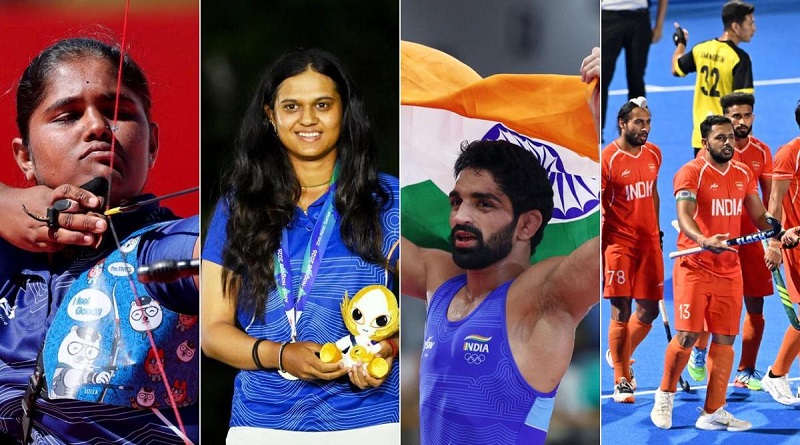
India Finishes Fourth in Medal Tally as Women Outshine Men, Hockey Teams Secure Olympic Qualification and Boxing Wrestling Make Strong Comebacks
India has completed its campaign at the Asian Games 2026 in Aichi Nagoya with 21 gold medals and a total of 85 medals. India finished fourth in the overall medal tally.
Uzbekistan also won 21 gold medals, but India finished behind them because Uzbekistan collected more silver medals. While India could not match its impressive medal haul from the 2023 Asian Games, the 2026 edition produced several historic and encouraging moments.
The biggest highlight was the performance of Indian women athletes. For the first time since the 2002 Busan Asian Games, Indian women won more gold medals than Indian men.
India also produced a remarkable performance in team events. Both the men’s and women’s hockey teams won gold medals and secured direct qualification for the 2028 Los Angeles Olympics. India also won gold medals in both men’s and women’s cricket and kabaddi.
Here are the five biggest takeaways from India’s Asian Games 2026 campaign.
1. Indian Women Move Ahead of Men After 24 Years
The performance of Indian women athletes was one of the biggest stories of the Asian Games 2026.
Indian women won 11 gold medals in women’s events, while Indian men secured seven gold medals in men’s events. Another three gold medals came from mixed events.
This meant that Indian women finished ahead of Indian men in terms of gold medals for the first time since the 2002 Busan Asian Games.
In Busan, Indian women had won six gold medals compared with five gold medals won by Indian men. The 2026 edition therefore marked an important milestone for Indian women’s sport.
The achievement is significant because it reflects the growing depth of Indian women athletes across multiple disciplines. From hockey and boxing to archery and other individual sports, Indian women made their presence strongly felt.
The performance also highlights the increasing importance of women’s sport in India’s overall international sporting ambitions.
2. Boxing and Wrestling Deliver Powerful Comebacks
Boxing and wrestling emerged as two of India’s strongest areas during the Asian Games 2026.
At the 2023 Asian Games in Hangzhou, India failed to win a gold medal in either boxing or wrestling. The situation changed dramatically in 2026.
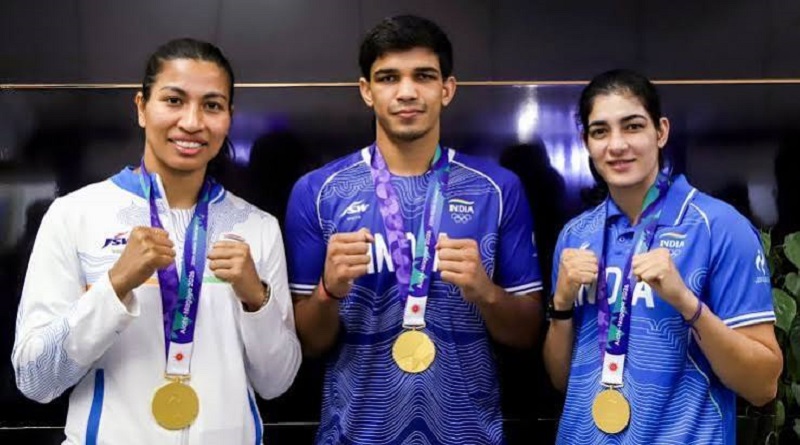
India won three gold medals in boxing and two gold medals in wrestling.
The five gold medals from these two sports helped compensate for India’s disappointing performance in some other disciplines.
The boxing comeback was particularly encouraging. Boxing has traditionally been one of India’s important medal-producing sports at major international competitions. After failing to win gold in 2023, three gold medals in 2026 represented a powerful recovery.
Wrestling also returned to the spotlight with two gold medals.
These performances underline the importance of maintaining a strong sporting pipeline. Success at the Asian Games can also provide valuable momentum for athletes preparing for the Olympics and World Championships.
3. Shooting and Athletics Remain India’s Biggest Concern
While India enjoyed impressive success in several sports, shooting and athletics produced a significant decline compared with the 2023 Asian Games.
Shooting was one of India’s biggest strengths in Hangzhou. India won seven gold medals in shooting in 2023. In 2026, that number dropped to three.
That represents a loss of four gold medals.
The decline in athletics was even more significant.
India won six athletics gold medals in 2023, but managed only one gold in 2026. That means India lost five gold medals compared with its previous performance.
Together, shooting and athletics accounted for a nine gold medal decline.
This is one of the biggest reasons why India’s overall gold medal tally fell from 28 in 2023 to 21 in 2026.
The figures underline an important point. India’s overall performance cannot be judged only by the final medal tally. Individual sports need to be analysed separately to understand where India gained strength and where it lost ground.
4. India Fails to Repeat Gold Medal Success in Several Sports
India also missed out on gold medals in several disciplines where it had achieved success at the 2023 Asian Games.
India had won two gold medals in squash in 2023. It had also secured one gold each in tennis, badminton and equestrian events.
This time, India failed to win a gold medal in any of these sports.
The decline is important because India needs a broader medal base if it wants to consistently challenge the leading Asian sporting nations.
Dependence on a limited number of disciplines can make the overall medal tally vulnerable to fluctuations in form, competition and qualification.
The challenge for Indian sports administrators and athletes will therefore be to maintain the progress made in emerging disciplines while rebuilding strength in sports where India previously won gold medals.
5. Team Events Remain a Major Strength for India
Team sports produced some of India’s most impressive moments at the Asian Games 2026.
India won gold medals in both men’s and women’s cricket, hockey and kabaddi.
Winning gold in both the men’s and women’s categories across multiple team sports demonstrates the growing strength of India’s team sporting ecosystem.
Team events require much more than individual talent. They demand tactical preparation, squad depth, coordination, consistency and the ability to perform under pressure.
India’s double gold performances in cricket, hockey and kabaddi therefore represent a significant achievement.
Among these sports, hockey produced the most important qualification benefit.
Hockey Gold Brings Two Olympic Tickets
Indian hockey enjoyed a historic campaign at the Asian Games 2026.
Both the Indian men’s and women’s hockey teams won gold medals. Their victories also secured direct qualification for the 2028 Los Angeles Olympics.
This made the hockey campaign particularly valuable.
Winning an Asian Games gold medal already represents a major achievement, but the direct Olympic qualification adds another layer of importance.
For the first time, India’s men’s and women’s hockey teams won gold at the same Asian Games edition.
The early Olympic qualification also gives both teams valuable preparation time ahead of Los Angeles 2028.
With the qualification hurdle already cleared, the focus can now shift towards building the strongest possible squads, improving consistency and preparing for the world’s best teams.
China Continues Its Unmatched Asian Games Dominance
China once again finished at the top of the Asian Games medal table.
China won an extraordinary 169 gold medals and 341 medals overall. Japan finished second with 83 gold medals.
The gap between China and the rest of Asia remained enormous.
China has dominated the Asian Games since 1982 and has remained at the top of the medal table at every edition since then.
That means China’s reign at the Asian Games has now continued for 44 years.
India finished fourth, matching its position from the previous Asian Games. However, India’s medal numbers declined significantly compared with 2023.
India won 28 gold medals and 106 medals overall in Hangzhou. In 2026, the tally fell to 21 gold medals and 85 medals.
The numbers show that India maintained its position among the leading Asian sporting nations but faced challenges in converting strong performances across several sports into a larger overall medal haul.
India and Uzbekistan Finish Level on Gold Medals
India and Uzbekistan both finished with 21 gold medals.
However, Uzbekistan finished ahead because it won more silver medals.
The Asian Games medal table is ranked primarily according to gold medals. When two countries have the same number of gold medals, silver medals become the next deciding factor.
India therefore ended the competition in fourth position despite matching Uzbekistan’s gold medal tally.
The result highlights how closely the competition among Asian sporting nations has become.
53 World Records and 76 Asian Records Broken
The Asian Games 2026 also witnessed an extraordinary number of record breaking performances.
A total of 53 world records and 76 Asian records were broken during the competition. In addition, 166 new Games records were established.
These numbers underline the rapidly rising standard of Asian sport.
Athletes are now competing at extremely high levels, with record breaking performances becoming increasingly common across disciplines.
India also produced a memorable record level performance in compound archery.
The Indian women’s compound archery team scored 238 points against China in the final, matching the world record.
The performance was another major highlight for Indian archery and showed the country’s growing strength in precision based sports.
What India Must Learn From Asian Games 2026
The Asian Games 2026 campaign provides India with both encouraging lessons and clear areas for improvement.
Boxing and wrestling demonstrated that Indian athletes can make powerful comebacks after disappointing performances at previous editions.
Hockey once again proved its importance, with both men’s and women’s teams winning gold and securing Olympic qualification.
Cricket and kabaddi also showed India’s growing dominance in major team sports.
The biggest concern remains the decline in shooting and athletics.
A nine gold medal reduction across these two disciplines compared with 2023 had a major impact on India’s overall tally.
The absence of gold medals in squash, tennis, badminton and equestrian events also highlights the need for greater consistency.
India will need to build a deeper medal base rather than relying heavily on a handful of successful disciplines.
Conclusion
The Asian Games 2026 campaign ended with India winning 21 gold medals and 85 medals overall, securing fourth place in the medal standings.
Although India could not match its 2023 performance of 28 gold medals and 106 medals, the campaign produced several historic achievements.
The biggest milestone was the performance of Indian women, who won 11 gold medals compared with seven won by Indian men. This marked the first time since the 2002 Busan Asian Games that Indian women finished ahead of Indian men in gold medal wins.
Boxing and wrestling delivered powerful comebacks, while cricket, hockey and kabaddi produced gold medal winning performances in both men’s and women’s events.
Hockey provided perhaps the most valuable achievement, with both Indian teams winning gold and securing direct qualification for the 2028 Los Angeles Olympics.
At the same time, the sharp decline in shooting and athletics remains a major area of concern. India lost nine gold medals across these two disciplines compared with 2023.
Overall, the Asian Games 2026 campaign was a mixture of historic breakthroughs, remarkable comebacks and important warning signs. The next challenge for India will be to convert these lessons into sustained success and carry the momentum into the 2028 Los Angeles Olympics.