
Bhuvneshwar Kumar’s Comeback Worries New Zealand as Mitchell Santner Calls Him Dangerous With the New Ball Ahead of First T20
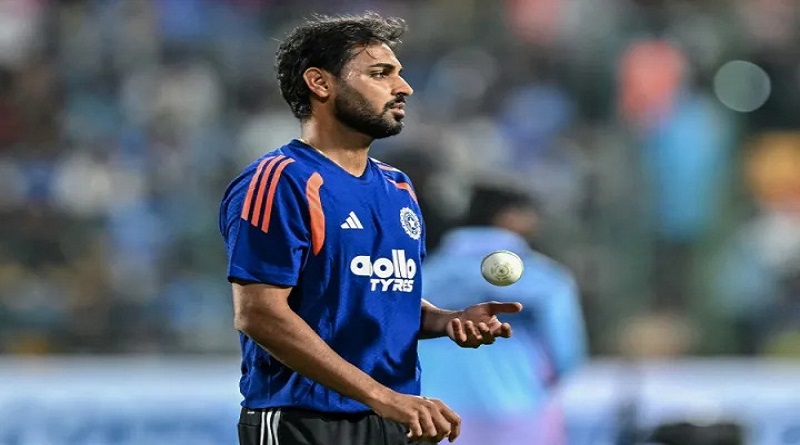
India vs New Zealand T20 Series: Mitchell Santner Praises Bhuvneshwar Kumar’s Swing Bowling
The upcoming T20 clash between India and New Zealand has attracted significant attention, with New Zealand captain Mitchell Santner highlighting the threat posed by experienced Indian fast bowler Bhuvneshwar Kumar. Ahead of the opening match, Santner acknowledged that Bhuvneshwar could present a major challenge for New Zealand, particularly with the new ball.
According to Santner, Bhuvneshwar has the ability to exploit even the slightest assistance from the pitch. His swing and seam movement can trouble batters, making him a dangerous opponent in conditions that favour fast bowling.
The first T20 match is scheduled for October 22 in Christchurch, according to the information provided. The contest is particularly significant because Bhuvneshwar has returned to India’s T20 International setup after an absence of nearly four years. His comeback has raised expectations among Indian cricket fans, who will be eager to see whether the experienced pacer can once again make an impact at the international level.
Bhuvneshwar is known for his accuracy, ability to swing the ball in both directions and knack for picking up early wickets. These qualities could prove valuable against a New Zealand batting lineup familiar with conditions that may assist seam bowlers.
Bhuvneshwar Kumar Returns to India’s T20I Squad After Nearly Four Years
Bhuvneshwar Kumar has established himself as one of India’s most skilful swing bowlers. Unlike fast bowlers who depend primarily on pace, he often relies on precision, movement and subtle changes in length to outsmart batters.
His ability to make the ball move late can create uncertainty, particularly during the powerplay when batters are looking to score quickly. Even on relatively flat surfaces, Bhuvneshwar has demonstrated that disciplined bowling and intelligent variations can make life difficult for opponents.
His return to India’s T20I setup after nearly four years is therefore an important development. He was selected in India’s playing XI for the fifth T20I against West Indies. However, rain prevented him from bowling, meaning he did not get an opportunity to demonstrate his skills during that match.
The upcoming contest against New Zealand could provide another opportunity for Bhuvneshwar to prove his value. If he receives the new ball, he could attempt to put the opposition under pressure by targeting the stumps, exploiting movement and forcing batters into risky shots.
His experience could also help India manage difficult situations. In T20 cricket, early wickets can significantly influence a team’s scoring rate and force the middle order to change its approach.
Mitchell Santner Explains Why Bhuvneshwar Is Dangerous With the New Ball
Santner’s comments underline the respect Bhuvneshwar commands as a specialist swing bowler.
The New Zealand captain said that if the pitch offers even a little assistance, Bhuvneshwar knows how to make the most of it. He also pointed out that the Indian pacer has managed to generate seam and swing movement on some of India’s flatter pitches.
This observation is important because flat surfaces generally offer limited assistance to fast bowlers. Batters can often play their shots confidently when the ball comes onto the bat at a consistent pace.
However, Bhuvneshwar’s bowling style can reduce that advantage. By varying his length, controlling the line and moving the ball through the air, he can challenge a batter’s judgement and create opportunities for dismissals.
Santner’s assessment also suggests that New Zealand will need to prepare carefully for the opening overs. Batters may have to exercise patience early in their innings rather than immediately attempting aggressive strokes.
If Bhuvneshwar finds his rhythm, the battle between his swing bowling and New Zealand’s top order could become one of the most interesting aspects of the match.
Santner Takes a Dig at Indian Pitches, Says Bowlers Face Difficult Conditions
Santner also commented on the challenges faced by bowlers in Indian conditions. He observed that recent matches have frequently favoured batters, with even targets of 250 runs being successfully chased.
The New Zealand captain jokingly questioned who would want to be a bowler in such circumstances. His remarks highlighted a wider debate surrounding the increasingly aggressive nature of modern T20 cricket.
High-scoring matches have become more common as batters continue to expand their range of attacking shots. Powerful hitting, innovative stroke play, shorter boundaries and aggressive approaches during the powerplay have increased the pressure on bowlers.
In such conditions, restricting the opposition becomes difficult, even for experienced international players. Bowlers must balance the need to take wickets with the requirement to prevent batters from scoring freely.
Santner suggested that Bhuvneshwar might enjoy the conditions in New Zealand more than those typically encountered on some Indian pitches.
If the surface and weather provide assistance, the Indian pacer could find opportunities to exploit his swing and seam movement. However, his success will ultimately depend on the actual conditions, his execution and the opposition’s batting approach.
Why New Zealand Conditions Could Suit Bhuvneshwar Kumar
Conditions in Christchurch could play an important role in determining how the opening T20 unfolds. Weather, atmospheric conditions and the nature of the pitch can influence the amount of movement available to fast bowlers.
When the surface offers seam movement or the ball swings in the air, batters may find it more difficult to play attacking shots confidently. Even small deviations can make a significant difference, especially when a bowler consistently targets the right areas.
Bhuvneshwar’s greatest strength is his ability to combine accuracy with movement. Rather than relying solely on speed, he can challenge batters through variations in swing, length and direction.
These qualities could make him a valuable option in conditions that assist seam bowling. If he can maintain a tight line and force batters to play away from their bodies, India may have opportunities to take early wickets.
Nevertheless, favourable conditions do not guarantee success. The effectiveness of any fast bowler depends on several factors, including the condition of the ball, the batter’s technique, the weather and the bowler’s rhythm.
New Zealand’s batters will also be familiar with local conditions, which could help them prepare for the challenge.
New Zealand Prepares a Special Plan for Vaibhav Suryavanshi
Another talking point ahead of the series is the prospect of young Indian batter Vaibhav Suryavanshi facing New Zealand.
Santner indicated that his team had studied Suryavanshi’s batting and developed plans to counter his aggressive approach. Although the youngster had not featured in the previous T20I series against West Indies, New Zealand were aware of his performances in the Indian Premier League.
Santner acknowledged the young batter’s talent and potential, suggesting that he could make a significant contribution to Indian cricket in the future, whether during this series or at a later stage.
Suryavanshi has attracted attention for his attacking style and ability to score quickly. In T20 cricket, a batter capable of changing the pace of an innings within a few overs can become a major asset.
However, facing international bowlers presents a different challenge. Opponents analyse batting patterns, preferred scoring areas and weaknesses against particular deliveries before developing their plans.
New Zealand could attempt to limit Suryavanshi’s scoring opportunities through disciplined bowling, changes in field placement and variations in pace and length.
Whether he features in the series and how he responds to the opposition’s plans will be closely watched by fans.
Abhishek Sharma and India’s Aggressive Batting Lineup Pose Another Challenge
Santner also referred to Abhishek Sharma while discussing India’s batting strength. The presence of aggressive players gives India the ability to put opposition bowlers under pressure, particularly during the powerplay.
Abhishek is known for his attacking approach and ability to score quickly. A strong start from the opening batters can give the middle order greater freedom to build on the momentum.
For New Zealand, containing India’s top order will be an important objective. If Indian batters find their rhythm early, the visiting side could face pressure to change its bowling combinations and field placements.
At the same time, Indian batters must remain alert to the possibility of movement with the new ball. If conditions favour seam bowling, playing too aggressively from the beginning could lead to early wickets.
The ability to adapt will therefore be crucial for both teams. India will want to maintain its attacking identity while avoiding unnecessary risks, whereas New Zealand will look to exploit any early uncertainty.
Pitch and Weather Could Decide the Direction of the First T20
Santner expressed hope that bowlers would have opportunities to influence the series. However, he acknowledged that match conditions can change quickly and that the pitch and weather could determine the approach adopted by both teams.
If the ball swings or seams, bowlers may enjoy an advantage during the opening overs. Batters could need time to assess the conditions before increasing their scoring rate.
On the other hand, if the pitch is flat and offers consistent bounce, the contest could become more favourable to attacking batting. In that situation, bowlers would need to rely on variations, accurate yorkers and changes of pace to prevent high scores.
Santner also noted that the second match would use the same pitch as the first, meaning the surface could behave differently after being used once.
A pitch can change as a match progresses and may respond differently during a subsequent game. Teams will therefore need to evaluate the conditions carefully before deciding on their batting and bowling strategies.
The toss, weather forecast and pitch assessment could all influence the decisions made by the captains.
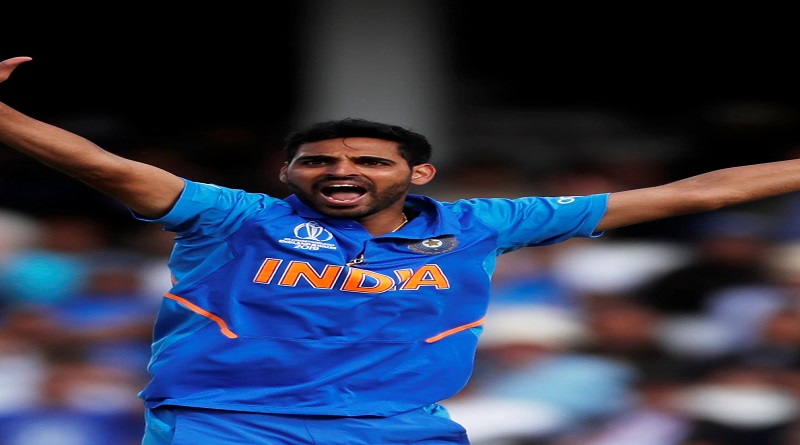
India Beat New Zealand 4-1 in Their Previous T20I Series
Santner also recalled India’s 4-1 victory over New Zealand in their previous five-match T20I series before the World Cup.
The New Zealand captain acknowledged India’s quality and pointed out that the team had maintained a strong level of performance over an extended period.
The previous result provides useful context for the upcoming contest, although it does not determine what will happen in the new series. Different conditions, player form and tactical decisions can change the balance between the teams.
India will look to build on its previous success, while New Zealand will aim to respond with a more effective performance.
For Santner, the challenge will involve finding the right balance between attacking India’s strong batting lineup and preventing the opposition from dominating the powerplay.
India, meanwhile, will look to make the most of its bowling resources, with Bhuvneshwar’s experience potentially offering an additional option if conditions favour swing.
What Makes India vs New Zealand’s First T20 Match Special?
The opening match has several important storylines.
First, Bhuvneshwar Kumar’s return to the T20I setup after nearly four years makes his performance a major point of interest. His ability to swing the new ball could provide India with an opportunity to put early pressure on New Zealand.
Second, Santner’s comments show that the opposition recognises the threat posed by India’s experienced pacer. New Zealand’s preparation for the opening overs could have a significant influence on the match.
Third, the discussion surrounding Vaibhav Suryavanshi and Abhishek Sharma highlights the strength and depth of India’s attacking batting options.
Finally, the conditions in Christchurch could make the contest particularly interesting. If the pitch assists fast bowlers, the battle between Bhuvneshwar and New Zealand’s top order could prove decisive. If the surface favours batting, both sides may need to focus on scoring quickly while maintaining control.
In T20 cricket, a few overs can change the direction of a match. Early wickets, powerplay scoring, middle-over control and execution at the death will all be important factors.
Conclusion
Mitchell Santner’s praise for Bhuvneshwar Kumar has added an intriguing dimension to the India vs New Zealand T20 contest. The New Zealand captain believes that the Indian pacer can exploit even limited assistance from the pitch, making him a potential threat with the new ball.
For Bhuvneshwar, the match represents an opportunity to demonstrate the value of his experience and swing bowling following his return to India’s T20I setup. If the conditions are favourable, his ability to move the ball could help India make an early impact.
New Zealand, meanwhile, will look to counter India’s aggressive batters, including Abhishek Sharma, while preparing for the possibility of facing Vaibhav Suryavanshi.
With the pitch, weather and early bowling spells likely to influence the contest, the opening T20 promises an engaging battle between India’s batting strength and New Zealand’s bowling plans.
The key question is whether Bhuvneshwar can turn Santner’s praise into a memorable performance on the field. His opening spell could become one of the defining moments of the contest.